
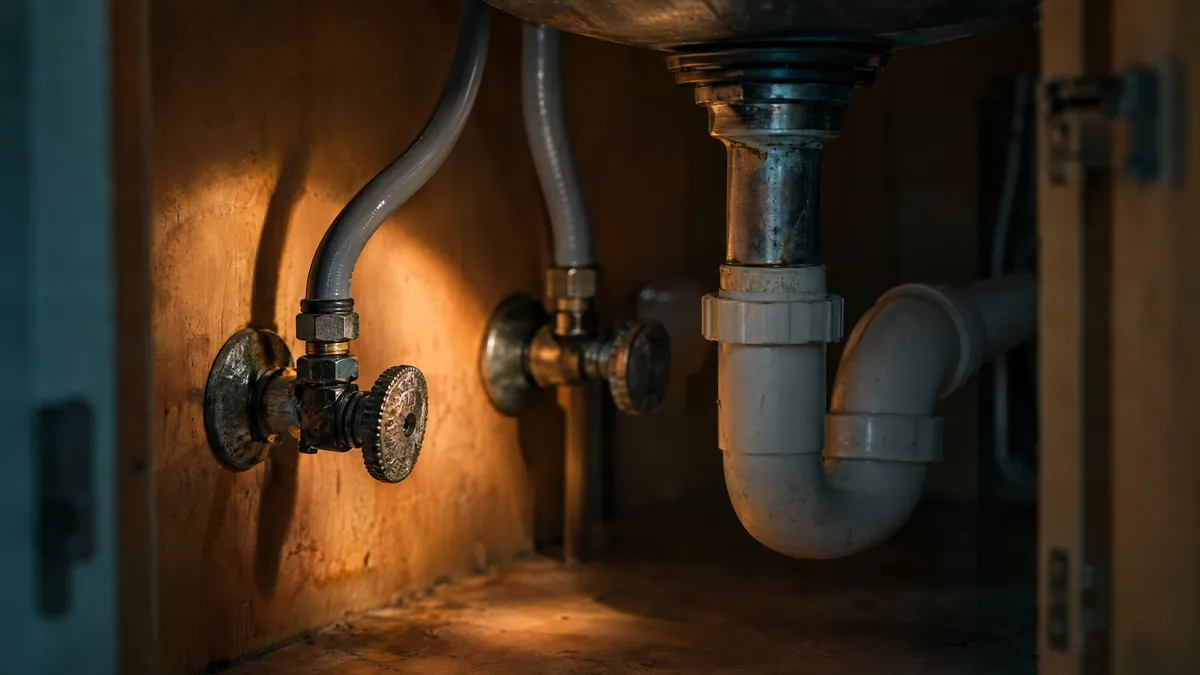
What the 4-point plumbing section asks
The plumbing section of the current Citizens 4-Point Inspection Form (Insp4pt 03 25) is built around one question: is water likely to end up where it should not? It asks the inspector to record:
- Pipe types present, checking all that apply: copper, PEX (with the year installed), PVC/CPVC, galvanized, cast iron, polybutylene, ABS or other.
- Age of the supply system and the drain system, each marked original to the home, completely re-piped or partially re-piped, with the year and extent of any renovation.
- Water heater: its location and age, and whether it has a temperature pressure relief (TPR) valve.
- Leaks: any indication of an active leak, and any indication of a prior leak.
- Fixture and appliance connections, each rated satisfactory or unsatisfactory: dishwasher, refrigerator, washing machine, water heater, showers and tubs, toilets, sinks, sump pump, main shut off valve, and all other visible plumbing.
The required photos include the water heater (with the TPR valve), under-cabinet plumbing and drains, and exposed valves. Citizens added the TPR photo and the separate supply and drain age questions when it updated the form in March 2025.
The form does not say which pipe materials are acceptable. That is up to each insurer. What follows is how to recognize three older materials on that list, and what published insurer rules say about them.
Polybutylene
How to recognize it
InterNACHI's guide to polybutylene for inspectors describes polybutylene (PB) pipe as:
- usually stamped with the code "PB2110",
- flexible and sometimes curved, unlike rigid copper,
- most often grey, though it can also be white, silver, black or blue,
- about ½ inch to 1 inch in diameter,
- used for water supply only, not for drain, waste or vent piping.
Places to look include pipes coming out of the wall under sinks and toilets, near the water heater, at the water meter and at the main shut off valve. InterNACHI also warns that some copper systems use PB at the joints, such as where PB meets copper stub-outs behind bathroom fixtures, so one copper section does not rule it out. White pipe might be CPVC and black might be polyethylene, so color alone is not proof. A licensed plumber can confirm.
Why insurers care
According to InterNACHI, PB was manufactured between 1978 and mid-1995 and installed in up to 10 million U.S. homes. Production stopped after widespread claims that the pipes were rupturing. InterNACHI cites research showing that some water disinfectants can react with PB and make it flake from the inside, and notes that class-action lawsuits against PB manufacturers resulted in payouts reaching $1 billion.
The key point for a buyer is InterNACHI's note that PB deterioration "happens from within and cannot be detected without turning off the water and dismantling the pipe." A clean-looking PB system can still fail. An inspector can identify the material, but cannot tell you how much life it has left.
What Citizens says
Citizens is direct about this one. Its polybutylene FAQ says new-business risks over 20 years old with polybutylene piping "are not insurable by Citizens" under its homeowners, dwelling and mobile home policy forms. Dwellings 20 years old or newer with PB "may be eligible" if there are no leaks, unrepaired water damage, disrepair or hazards. Citizens' plumbing FAQ lists polybutylene alongside active leaks, unrepaired water damage and plumbing not in good working order as conditions that make a property ineligible.
Anchor's Florida homeowners underwriting reference guide (version dated December 2019) also says "polybutylene is ineligible."
Galvanized steel
How to recognize it
Galvanized pipe is steel pipe with a zinc coating, joined with threaded fittings. It is rigid and dull gray, and it was used for water supply lines in older homes.
Why insurers care
The problem is inside the pipe. InterNACHI's article on plumbing in older homes says galvanized pipe "has a useful life of approximately 20 to 30 years" and that "internal corrosion or deterioration is not visible in piping and is difficult to detect." An inspector looking at the outside of the pipe cannot measure what is happening inside it.
What insurers say
Here the rules vary more. The Citizens form lists galvanized as a pipe type to record, but Citizens' public FAQs do not list galvanized pipe as ineligible the way they do polybutylene. Anchor's 2019 guide says it will "accept PEX and galvanized plumbing." Other carriers may be stricter. Ask your agent before you assume galvanized is fine, or that it is a deal breaker.
Cast iron drains
How to recognize it
Cast iron is heavy, dark metal pipe, used in homes on the drain, waste and vent side rather than for water supply. Where it is visible at all, it is usually at a cleanout or an exposed run of drain line. That is also why the form asks about the age of the drain system separately from the supply system.
Why insurers care
Cast iron has a long but finite service life. InterNACHI's estimated life expectancy chart for Florida homes lists cast-iron waste pipe at about 40 years above ground and 50 to 60 years below ground. Those are typical figures, not guarantees for any one house.
In a slab-on-grade home, much of the drain line runs under the floor, out of sight. A 4-point records what is visible. A sewer scope, which sends a camera through the main drain line, can show more. High Tide offers sewer scopes through a third-party partner, from $390.
The water heater section
The water heater gets more attention on the 4-point than many owners expect. Here is what the form asks about and why.
TPR valve. A temperature pressure relief valve opens if the water in the tank gets too hot or the pressure gets too high. InterNACHI's article on TPR valves and discharge piping explains that if these safety devices fail, the tank can rupture (it also notes such failures are rare), and that the valve should connect to a discharge pipe made of an approved material such as CPVC or copper, not ordinary PVC. The form asks whether the valve is there, and the photo requirement now includes it.
Leaks. The form asks separately about any sign of an active leak and any sign of a prior leak. Those questions cover all the plumbing, and the area around the water heater is an obvious place to check.
Age and location. The form asks both. InterNACHI's Florida chart lists a conventional tank water heater at 6 to 12 years. Some carriers set their own limit: Anchor's 2019 guide says water heaters are eligible "up to 15 years old or less," with tankless units acceptable regardless of age. The manufacturer's label on the tank is one place the age can come from, so keep it visible.
What a homeowner can do
Get a licensed plumber's opinion on the material. If you think you have polybutylene or old galvanized supply lines, a plumber can confirm what is there and quote a re-pipe.
Document any re-pipe. The form asks whether the system is original, completely re-piped or partially re-piped, and for the year and extent of the work. A permit, an invoice and a note of which lines were replaced make that answer easy. A partial re-pipe that leaves PB in place may not satisfy an insurer that excludes it.
Fix leaks before you apply. Citizens says serious hazards, including active leaks or evidence of leaks, should be repaired before an application is submitted (Citizens Inspections).
Know the whole picture. A 4-point only looks at four systems. If you are buying, our comparison of 4-point and full home inspections explains what else is worth checking. The panel and wiring side has its own list of flagged items, covered in electrical panels Florida insurers flag.
The short version
- Polybutylene is the clearest problem: Citizens will not write new business on homes over 20 years old that have it.
- Galvanized and cast iron are judged more on age, condition and each carrier's rules, so documentation of any replacement matters.
- The water heater's TPR valve, age, location and any leaks are all on the form.
Joanna holds InterNACHI's Plumbing Inspector certification. The 4-point inspection in Manatee and Sarasota counties from High Tide records pipe types, water heater details and the photos insurers ask for, for $175 on its own or $125 with a home inspection. This is general information, and your insurer makes the call, so confirm current rules with your agent.